10 Signs of a Hidden Water Leak at Home (and What to Do About Each)
A hidden leak rarely announces itself with a burst pipe. It shows up as a creeping bill, a warm patch on the floor, a musty smell you cannot place. Here are the ten signs worth taking seriously, what each one usually means, and the first sensible check to make before anything gets torn up.
Most hidden leaks do not arrive with drama. There is no burst pipe, no water running down a wall, no obvious puddle. Instead the signs are quiet and easy to explain away: a water bill that has crept up, a patch of floor that feels warmer than it should, a smell of damp that lingers after you have cleaned. By the time the evidence is undeniable, the leak has often been running for weeks or months behind a wall, under a screed, or beneath a suspended floor.
The good news is that hidden leaks almost always leave a trail. If you know what to look for, you can catch one early, before it damages joists, ruins plaster, or feeds a patch of black mould. This guide walks through the ten signs we see most often in London homes, what each one usually means, and the first sensible check you can make yourself. None of these checks require tools you do not already own, and none of them involve lifting a single tile.
Why hidden leaks are worth taking seriously
Water is patient. A pinhole in a copper pipe or a failing compression joint might only weep a few millilitres an hour, but that adds up to litres a day, every day, with nowhere obvious to go. In a London property, that water tends to track along the path of least resistance: down a cavity, across a floor void, into a screed. The damage shows up somewhere other than the source, which is exactly why hidden leaks are so hard to pin down without proper detection.
Left alone, a slow leak does three expensive things. It rots timber and corrodes fixings. It saturates insulation and plaster so they need replacing rather than drying. And it creates the warm, damp, dark conditions that mould needs to establish. Catching the signs early is the difference between a small, targeted repair and a large, disruptive one.
The 10 signs of a hidden water leak
Here are the warning signs in the order they tend to be noticed, from the purely financial to the physically obvious. Any one of them is worth a second look. Two or more together, and a leak becomes the most likely explanation.
- An unexplained jump in your water bill
- A water meter that keeps moving with every tap off
- Damp or unexpectedly warm patches on floors and walls
- A persistent musty or earthy smell
- Boiler or heating system pressure that keeps dropping
- Mould or mildew appearing in a new spot
- Yellow, brown, or tide-mark staining on ceilings and walls
- The sound of running or trickling water when nothing is on
- A noticeable drop in water pressure or flow
- Flooring that has cracked, lifted, cupped, or bubbled
1. An unexplained jump in your water bill
If you are on a meter, a hidden leak shows up in pounds long before it shows up on a wall. A bill that has risen with no change in how many people live in the house, no new appliances, and no unusually hot summer of garden watering is one of the earliest and most reliable signals. Even a modest continuous leak can add a meaningful amount to a quarterly bill.
First sensible check: dig out your last few bills or log in to your water company account and compare like-for-like periods. Note your current meter reading, then take another reading after a day of normal use. If consumption looks far higher than your household could plausibly use, treat it as a leak until proven otherwise. Our guide on a water bill that has suddenly gone high because of a hidden leak walks through this in more detail.
2. A water meter that keeps moving with the taps off
This is the single most useful test a homeowner can run, and it costs nothing. Your water meter should be completely still when no water is being used anywhere in the property. If the dial or the smallest digit is creeping round with every tap, appliance, and toilet confirmed off, water is escaping somewhere on your supply.
First sensible check: turn off every water-using appliance and tap, then watch the meter for a few minutes. If it is still moving, note the reading, avoid all water use for an hour or two, and read it again. Any change confirms flow you cannot account for. A spinning meter does not tell you where the leak is, only that one exists, which is a useful distinction covered in our piece on why your water meter is spinning.
3. Damp or unexpectedly warm patches
Run your hand or a bare foot across a floor and you can sometimes feel a leak before you see it. A cold-water leak leaves a patch that feels damp or cooler than its surroundings. A leak on the hot supply or the central heating tends to do the opposite, leaving a warm patch on a tiled or laminate floor with no radiator or pipe run to explain it. On walls, damp often reads as a darker, cooler area that never quite dries.
First sensible check: compare the suspect area against a similar surface elsewhere in the room. A warm floor patch away from any obvious heat source strongly suggests a hot or heating pipe leaking beneath the screed, and is a classic case where non-invasive thermal imaging earns its keep.
4. A persistent musty or earthy smell
Trapped water that cannot evaporate quickly develops a distinctive musty, earthy, or slightly sour smell. It is the smell of damp plaster, wet timber, and the beginnings of mould growth in a space with no airflow, such as a wall cavity, an under-sink cupboard, or a floor void. The giveaway is that the smell persists after cleaning and is often stronger in one part of a room or near skirting boards.
First sensible check: try to locate where the smell is strongest. Open cupboards, sniff along skirtings, and check the base of walls. If the smell concentrates in one area with no spilt food or blocked drain to explain it, you may be smelling a leak that has been running long enough to start affecting the fabric of the building.
5. Boiler or heating pressure that keeps dropping
A sealed central heating system should hold its pressure. If the gauge on your boiler keeps falling below roughly one bar and you find yourself topping it up every week or two, the water is going somewhere. Sometimes that is a leaking radiator valve or a weeping joint you can see. Often, in properties with pipework buried in the floor, it is a hidden leak on the heating circuit under the screed.
First sensible check: watch the pressure gauge over a few days and note how fast it drops. Check every visible radiator, valve, and the boiler itself for damp or staining. If everything visible is bone dry but the pressure still falls, the leak is almost certainly on a concealed section of the heating pipework, which needs specialist tracing rather than guesswork.
6. Mould or mildew in a new spot
Mould needs moisture, and a leak provides a steady supply in exactly the hidden, unventilated places mould loves. Black or green speckling appearing on a wall, ceiling, or in a corner that was previously clean, especially away from the usual condensation hot spots like bathroom windows, is worth investigating. Condensation mould tends to sit on cold surfaces and window reveals. Leak-driven mould often appears lower down, near skirtings, or in a defined patch fed by water tracking through the structure.
First sensible check: consider the location and pattern. Is it near a bathroom, kitchen, or a run of pipework? Does the surface feel damp? If the mould keeps returning after you clean it, or sits somewhere condensation would not naturally form, the underlying cause may be a leak rather than ventilation.
7. Yellow, brown, or tide-mark staining
Staining is water that has already passed through a material and left its mark. On a ceiling it usually shows as a yellow or brown ring, sometimes with a darker tide mark at the edge where the wet and dry areas meet. On walls it can look like a spreading blotch or a stain that bleeds back through fresh paint. The stain often sits some distance from the actual leak because water travels before it drops.
First sensible check: note whether the stain is growing, and whether it darkens after wet weather or heavy water use. A stain that spreads or reappears through new paint points to an active leak. One that has stayed exactly the same size for years may be historic, but it is worth confirming rather than assuming.
8. The sound of running or trickling water
In a quiet house, a hidden leak can sometimes be heard: a faint hiss, trickle, or the sound of water moving inside a wall or under a floor when every tap is off. It is easiest to notice late at night when background noise drops. The sound is water escaping under pressure or draining away, and it is one of the more direct clues you can get without any equipment.
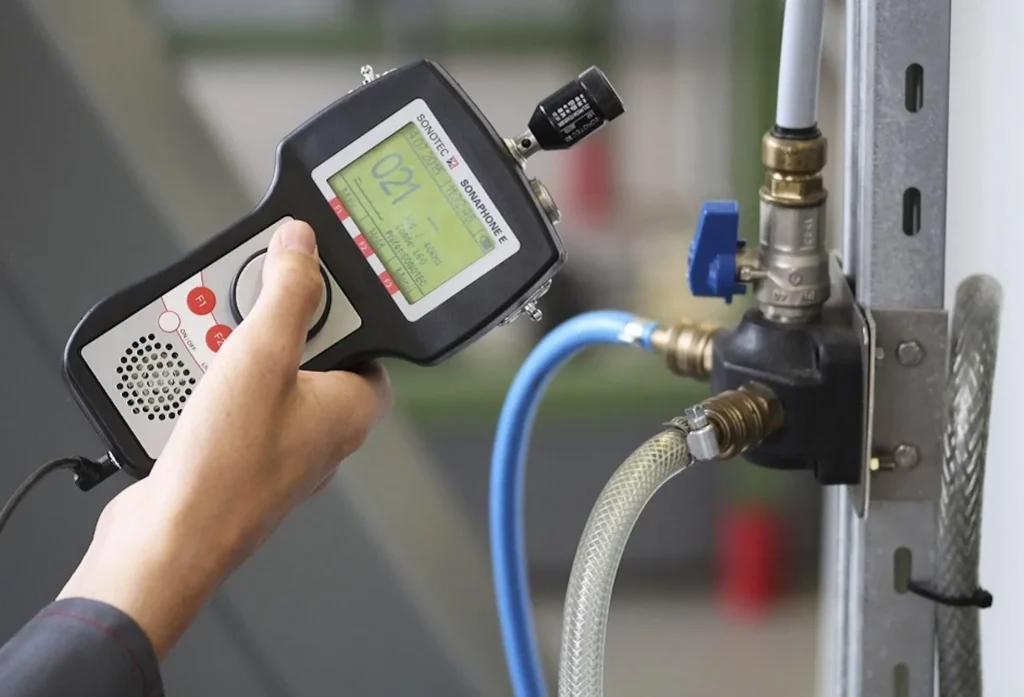
First sensible check: turn everything off, wait for the house to go quiet, and listen at walls, along floors, and near stopcocks and pipe runs. Acoustic listening is exactly how specialists locate many leaks, using sensitive microphones that amplify what your ear can only just detect, so if you can hear something, there is a good chance there is something to find.
9. A noticeable drop in pressure or flow
When water is escaping before it reaches your taps, less arrives at the outlet. A shower that has lost its force, taps that run more weakly than they used to, or a general drop in pressure across the property with no work having been done on the mains can all point to a leak on the supply pipe. Pressure loss has other causes too, from mains issues to a partially closed valve, so it is a clue rather than a diagnosis.
First sensible check: work out whether the drop affects the whole house or just one outlet. A single weak tap is more likely to be a blocked aerator or a local fault. A property-wide loss of pressure, especially alongside a moving meter, is more consistent with a leak on the incoming supply.
10. Cracked, lifting, or cupped flooring
Flooring is a good moisture detector because it moves when it gets wet. Timber and laminate absorb water and swell, which shows up as cupped boards, lifting edges, gaps, or a springy, uneven feel underfoot. Tiles can lift or sound hollow when the adhesive beneath fails, and grout can crack or discolour. Vinyl may bubble or peel at the edges. When flooring changes shape with no obvious spill to blame, moisture from below is a prime suspect.
First sensible check: press on the affected boards or tiles and note any sponginess, movement, or hollow sound. Look for cupping, lifting, or staining concentrated in one area rather than spread evenly. Localised damage above or near a pipe run is a strong hint that water is reaching the floor from underneath.
Signs mapped to their likely source
No single sign is proof on its own, but each one points more strongly to some sources than others. The table below is a rough guide to where each sign tends to lead. It is a starting point for thinking, not a substitute for proper detection.
| Sign you have noticed | Most likely source to investigate first |
|---|---|
| High water bill, no lifestyle change | Continuous leak on the mains supply or an internal cold feed |
| Meter moving with all taps off | Supply pipe, underground service pipe, or an internal joint under pressure |
| Warm patch on the floor | Hot-water or central heating pipe under the screed or floor |
| Cold, damp patch on floor or wall | Cold-water pipe or a leak tracking through the structure |
| Musty smell near skirtings or cupboards | Slow leak in a wall cavity, floor void, or under-sink pipework |
| Boiler pressure dropping repeatedly | Concealed leak on the sealed heating circuit |
| Mould low on a wall or in a defined patch | Leak feeding moisture into the wall, rather than condensation |
| Ceiling or wall staining | Leak on floor above, a bathroom, or a pipe run behind the surface |
| Sound of running water, taps off | Pressurised pipe leaking within a wall or floor |
| Whole-house pressure drop | Leak on the incoming supply before it reaches your taps |
| Cupped, lifting, or hollow flooring | Water reaching the floor from a pipe beneath it |
What the DIY forums actually agree on
If you spend any time reading through the home-improvement communities on Reddit, DIYnot, or the MoneySavingExpert forums, a fairly consistent picture emerges on hidden leaks, and it is worth being honest about what that consensus is and is not.
The broad agreement is that the meter test is the first thing anyone should do, because it is free and it settles the basic question of whether water is escaping at all. There is strong support for isolating the problem yourself before paying anyone: checking the meter, ruling out toilets that are quietly overflowing into the pan, and confirming whether the loss is on the cold, the hot, or the heating side. Many contributors point out that a dropping boiler pressure with no visible radiator leak almost always means a concealed pipe, and that chasing it by lifting random floorboards is a fast way to cause more damage than the leak itself.
The other recurring theme is caution about jumping straight to destructive investigation. Experienced posters repeatedly warn against letting anyone start cutting into walls or floors on a hunch, and they favour proper detection to pin the location down first. There is also a realistic strand of advice around insurance: trace-and-access cover exists on many home policies to pay for finding and reaching a leak, but claims go far more smoothly when the source is properly located and documented rather than guessed at.
What the forums cannot give you is a diagnosis for your specific property. General principles travel well; the exact location of a leak under your particular floor does not. That is the line where self-help ends and specialist detection begins.
How professional leak detection actually works
Proper leak detection is not one clever gadget, it is several methods used together and cross-checked. The point of using more than one is to build confidence about the exact location before anything is opened up, so the repair is small and targeted rather than exploratory.
Non-invasive, multi-method detection
A thorough investigation typically combines acoustic listening, which amplifies the sound of water escaping under pressure, with thermal imaging that reveals the temperature difference a hot or cold leak creates through a floor or wall. Moisture meters map how far water has spread, and where the system allows, tracer gas can be introduced into the pipework and detected at the point it surfaces. Each method confirms or challenges the others, and the combination is what pins a leak to a specific spot without lifting the whole floor to find it.
How we work at London Leak Specialist
Our approach is built around removing the two things homeowners worry about most: uncertainty over cost, and the risk of paying to have their home opened up for nothing. We agree a fixed hourly rate at the point of booking, so you know the rate before we arrive, with no hourly meter running. We operate on a no find, no fee basis, so if we cannot locate your leak you are not left paying for the attempt. And every investigation comes with an insurer-ready report documenting the findings, which is exactly what a home insurance trace-and-access claim needs. You can read more about how this works on our London leak detection page.
When to run the checks yourself, and when to call
Not every sign needs a professional on day one. The meter test, comparing your bills, feeling for warm or damp patches, listening in a quiet house, and checking your boiler pressure are all sensible things to do first. They cost nothing and they often confirm whether you have a leak at all, which is genuinely useful information.
The point to call in detection is when you have confirmed water is escaping but cannot see where, when a warm floor or dropping boiler pressure points to a concealed pipe, or when staining and damage are spreading and you need to stop the source before repairs. The aim is always to locate precisely before anyone cuts into anything, so the fix stays small and your home stays intact.
Frequently asked questions
Frequently asked questions
How do I know if my high water bill is a leak or just higher usage?
Start by comparing like-for-like billing periods and ruling out obvious changes such as more people in the house or heavy garden watering. Then run the meter test: turn everything off and take a reading, avoid all water use for an hour or two, and read it again. If consumption has climbed with no change in how you live and the meter moves with the taps off, a hidden leak is the most likely explanation and worth investigating properly.
Can I find a hidden leak myself without lifting floors?
You can confirm that a leak exists and often narrow down which system it is on, but pinpointing the exact location usually needs specialist equipment. The meter test tells you water is escaping, checking boiler pressure isolates the heating circuit, and listening in a quiet house can hint at a location. What you should avoid is lifting floors or cutting into walls on a hunch, which often causes more damage than the leak. Non-invasive detection locates the source first, so the repair stays targeted.
Why does my boiler pressure keep dropping with no visible leak?
A sealed heating system should hold its pressure, so if it keeps falling below around one bar and every visible radiator, valve, and joint is dry, the water is usually escaping from a concealed section of pipework, often buried in the floor. Topping up masks the symptom but not the cause. Because the leak is hidden, it needs proper tracing with thermal imaging and acoustic methods rather than guesswork, so the leaking spot can be reached without disturbing the whole floor.
Is a warm patch on my floor always a leak?
Not always, but a warm patch with no radiator, underfloor heating, or pipe run to explain it is a classic sign of a hot-water or central heating pipe leaking beneath the screed. Compare the area against similar flooring elsewhere in the room. If it stays consistently warmer with no obvious heat source, especially alongside dropping boiler pressure or a moving meter, it is worth having thermal imaging confirm whether a concealed hot pipe is leaking underneath.
Will my home insurance cover finding and fixing a hidden leak?
Many home insurance policies include trace-and-access cover, which is designed to pay for locating a leak and reaching it, and often for making good afterwards. Cover varies by policy, so check your documents or ask your insurer. Claims tend to go more smoothly when the leak has been properly located and documented rather than guessed at, which is why we provide an insurer-ready report with every investigation setting out what was found and how.
How much does professional leak detection typically cost?
Costs vary with the property and how accessible the pipework is, so as a general guide, typical UK trade cost-guide ranges for a professional leak detection visit tend to sit in the low-to-mid hundreds of pounds, with any repair usually priced separately. We agree a fixed hourly rate at the point of booking so you know the rate before we arrive, and we work on a no find, no fee basis, so you are not left paying for an unsuccessful search.