Found. Fixed. Retested.
Water Leak Repair London
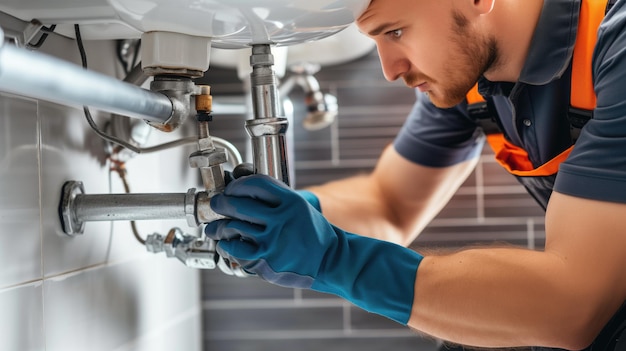
Finding a leak is only half the job. Our engineers are qualified plumbers carrying pipe, fittings and repair couplings on every van — so when the leak is exposed, it gets fixed there and then, not booked in for another week of dripping.
Quick answer
The cost depends on locating the leak precisely first, then the repair itself. In London, a straightforward repair once the leak is found often falls within typical UK trade cost-guide ranges. Gaining access and making good afterwards are usually priced separately, so ask for each line to be itemised.
Water leak repair costs in London
| Job | Typical cost | Time |
|---|---|---|
| Pinhole or joint repair (leak already located) | £120–£300 | 1–2 hours |
| Section of pipe replacement | £200–£600 | 2–4 hours |
| Access / opening up (lifting floor, chasing wall) | £150–£500 | 2–5 hours |
| Reinstatement / making good after repair | £150–£600 | Half to full day |
| Emergency or out-of-hours uplift | £80–£250 added | Same day |
Typical UK trade cost-guide ranges, not a quote. Our detection is charged at a fixed hourly rate quoted at booking, under no find, no fee.
We repair pinholed copper, split plastic, failed compression and soldered joints, weeping radiator valves, leaking stop taps and corroded rising mains — in every property type London can offer, from Georgian terraces to riverside towers.
Every repair ends the same way: the system is refilled, pressure-tested and left provably watertight, with photos of the completed work for your records.
Repairs are quoted before work starts — either as a fixed price for the defined fix or hourly for exploratory work, agreed with you first.
What you get
- Same-visit repair after detection where access allows
- Copper, plastic, lead-replacement and mixed-material pipework
- Pinholes, splits, failed joints, valves and stop taps
- Pressure test and retest on completion
- Clean, tidy access and making-good coordination
- Photo record of every completed repair
How it works
From finding the leak to closing the floor
01
Isolate the water
The affected circuit is shut down to stop damage while we work.
02
Expose the failure
Precise access from the detection stage means a small, targeted opening.
03
Repair to standard
Proper fittings and materials — no temporary bodges left behind.
04
Prove it dry
Refill, pressure test, and photographic confirmation before we leave.
Before you book anyone
Six things to know before you book water leak repair in London
01
Know the going rate before anyone quotes you
London market figures for 2025-26: a small, accessible pipe repair typically costs £80-£150, a burst pipe £200-£500+, replacing a section of pipework £300-£1,200, and underground repairs £500-£2,000+ once excavation is involved. After-hours emergency repairs run £150-£400+. If a quote lands far above these bands, ask the trader to itemise labour, parts and access work. A firm that cannot break its own price down is usually pricing the panic, not the job.
02
The repair is only as good as the detection before it
The most expensive mistake in leak repair is cutting into the wrong wall or floor. Water tracks along joists and pipe runs, so the damp patch is often metres from the actual leak. Before agreeing to any opening-up, ask how the leak was pinpointed: acoustic listening, thermal imaging, tracer gas and moisture mapping should confirm each other. This is why we survey at a fixed hourly detection rate (typically £340–£680 in total, no find no fee) before quoting the repair - one hole, not five.
03
A patch is not a repair - know the difference
Self-amalgamating tape, slip couplings, repair clamps and liquid leak sealer are get-you-through-the-night measures; even trade forums describe tape as a last resort. A permanent repair means cutting out the damaged section, fitting new pipe with soldered or press-fit joints, then pressure testing the circuit before anything is closed back up. If an invoice says 'sealed leak' rather than 'replaced section', ask what was actually done - patched pipes fail again, usually behind freshly redecorated walls.
04
Recurring pinhole leaks mean a system problem, not bad luck
Pinhole leaks form when copper corrodes from the inside out, and the conditions that caused one usually exist along the whole run. The widely used industry rule of thumb: three or more pinhole leaks in different spots within 12 months points to repiping or rerouting that section, not another patch. A first isolated pinhole at a joint is reasonable to repair; a third callout in a year means you are paying repeatedly for a problem the pipe will keep producing.
05
Watch for the emergency-invoice playbook
Documented UK consumer cases show emergency plumbing bills of £888 and £1,437 for modest jobs, built from open-ended hourly rates, hidden 'admin' charges buried in terms sent mid-job, and pressure to pay before the engineer leaves. A £90-per-hour headline rate means little when the hours are uncapped. Protect yourself: get the total price in writing before work starts, refuse to accept terms emailed while the clock is running, and never pay on the doorstep under pressure.
06
Think about your insurance claim before the repair, not after
Most UK policies cover the water damage and trace-and-access costs, but not the repair of the pipe itself. Cover limits vary hugely - some standard policies include no trace-and-access at all, while others cap it at £5,000-£15,000. Loss adjusters reject claims backed by a one-line plumber's invoice; they want cause, origin, method and evidence. Our trace-and-access reports (moisture map, photos, methodology) are delivered within 48 hours and structured for UK loss adjusters.
Compare like for like
Water Leak Repair In London Done Properly
Not every leak call ends the same way. Some firms open walls before they have found the source, others patch the symptom and move on. This table sets out how a rushed call-out and a patch-and-go trade tend to work, and how we approach locating, repairing and documenting a leak instead.
| What to check | A rushed call-out firm | A patch-and-go firm | London Leak Specialist |
|---|---|---|---|
| Locating the leak first | Often starts cutting or lifting where the damp shows, hoping the source sits nearby rather than tracing it. | Relies on one favoured method, so a leak that method cannot read gets guessed at rather than pinpointed. | We trace the leak with acoustic, thermal and moisture methods before anything is opened, so work targets the actual source. |
| Permanent repair or patch | Applies a quick seal to stop the visible drip, which can hold briefly then fail once pressure returns. | Repairs to a fixed template regardless of the pipe or fitting, so the fix may not suit the real fault. | We repair the fault itself, whether pipe, joint or fitting, aiming for a lasting result rather than a temporary hold. |
| Price before work starts | May quote low on the phone, then the figure climbs once access and materials are added on site. | Prices the single method it offers, so unexpected findings tend to arrive as extra charges later. | We explain the likely cost against typical UK trade cost-guide ranges before starting, and flag any change before we act on it. |
| Access and reinstatement | Opens floors or walls to reach the pipe and often leaves the making-good for you to sort out. | Follows a set access routine that may remove more than the fault needs, with reinstatement left vague. | We plan the smallest sensible access, agree who reinstates what beforehand, and set out the making-good clearly. |
| Detection and plumbing together | Detects or repairs, rarely both, so you may still need a second trade to finish the job. | Offers one discipline well but hands off the other, leaving a gap between finding and fixing. | We both find the leak and carry out the plumbing repair, so one team sees the job through end to end. |
| Insurer-ready documentation | Leaves little record, so an escape-of-water claim can stall for want of evidence of cause and repair. | Documents its own step but not the full picture an insurer needs to assess the loss. | We record the source, method and repair with photos and notes, giving you clear evidence for an insurance claim. |
| Working around your home | Focused on speed, so dust, mess and disruption tend to be treated as your problem afterwards. | Works to its own routine with limited regard for the room or occupants around the repair. | We protect the area, keep you informed as we go, and tidy the working space once the repair is complete. |
| Standing behind the fix | Once paid, tends to move on, and a returning leak can mean a fresh call-out and fresh charge. | Warrants only the narrow work it did, so a related fault may fall outside what it will revisit. | We stand behind the repair we carry out and will return to address it if the same fault recurs. |
From the forums
The repair complaints that come up again and again
London homeowners compare notes candidly on Reddit, consumer-rights threads and UK trade forums, and the same frustrations surface again and again: surprise invoices, repairs that fail within months, and insurance small print discovered too late.
In consumer-rights threads, homeowners dissecting emergency plumbing invoices
The recurring story is a modest leak turning into a three- or four-figure bill: hourly rates that keep running, an unexplained admin fee appearing on the final invoice, terms and conditions sent as a long email while the engineer is already working, and refusal to leave until payment is made. Posters consistently advise getting the full price agreed in writing before anyone touches a pipe. Our take: this is exactly why we agree a fixed hourly detection rate at booking and quote every repair separately before work starts.
On UK plumbing and DIY forums, the debate over tape, clamps and leak sealers
Even tradespeople on plumbing forums describe self-amalgamating tape as a last-resort stopgap that can unwind without a jubilee clip, and treat clamps and copper slips as temporary containment rather than repair. Homeowners who accepted a 'sealed' leak often report it reopening months later behind finished walls. Our take: a permanent repair replaces the damaged section with new jointed pipe and is pressure tested before closing up - if your paperwork says 'sealed', ask what that means.
In homeowner threads on recurring pinhole leaks in copper pipework
People describe fixing one pinhole only for another to appear a metre along the same run weeks later, and the community consensus is that repeated pinholes signal internal corrosion along the whole pipe, not isolated bad luck. The commonly cited threshold is three leaks in twelve months as the point to stop patching. Our take: we agree - at that point the honest recommendation is rerouting or repiping the affected section, and any firm happy to keep billing you for patches is not doing you a favour.
In threads about trace-and-access insurance claims after hidden leaks
Homeowners are regularly surprised to learn their policy covers the damage and the cost of finding the leak, but not fixing the pipe - and that trace-and-access limits range from nothing on basic policies to £5,000-£15,000 on premium tiers. Claims backed by vague invoices get challenged as 'wear and tear'. Our take: a proper report stating cause, origin, method and moisture evidence is what loss adjusters act on, so insist on one from whoever finds your leak.
In discussions of 'no find no fee' leak detection offers
Sharp-eyed posters point out that many no-find-no-fee promises carry heavy exclusions in the small print: central heating and mains leaks excluded, pipes in ducting or under membranes not covered, the guarantee limited to a single working day or capped at one kitchen and three bathrooms. The advice is always to read the terms before booking, not after. Our take: ask any detection firm to state its exclusions in writing up front - a genuine guarantee survives that question.
Questions
Water leak repair: cost, access and making good
Can every leak be repaired on the first visit?
Most can. The exceptions are repairs needing specialist parts, extensive drying before reinstatement, or access through finishes you may want a specialist to restore — in which case we make the pipe safe and watertight first, then schedule the rest.
What is a pinhole leak and why did I get one?
A tiny corrosion-driven perforation in copper pipe, common in London’s older housing stock where decades of slightly acidic or turbulent water thin the pipe wall from inside. One pinhole often signals more to come on the same run, and we will tell you honestly if the pipework is near the end of its life.
Do you repair leaks found by another company?
Yes. If you already have a detection report, send it over — we price the repair from the evidence and verify the location before opening anything.
How much does it cost to repair a water leak in London?
A small, accessible pipe repair in London typically costs £80-£150. Burst pipes run £200-£500+, replacing a pipe section £300-£1,200, and underground supply pipe repairs £500-£2,000+ where excavation is needed. After-hours emergency repairs cost £150-£400+. Hidden leaks add a detection stage first - ours is charged at a fixed hourly rate, usually £340-£680 in total for a domestic visit - but pinpointing the leak precisely usually reduces the overall repair and reinstatement bill.
Is a water leak an emergency?
Treat it as an emergency if water is flowing visibly, a ceiling is bulging or sagging, or water is near electrics - turn off the internal stopcock and isolate electricity to affected circuits immediately. A slow hidden leak (unexplained meter movement, boiler pressure dropping, damp patches) is urgent rather than an emergency: it can usually wait a day or two for a proper survey, but every week of delay adds water damage.
Does home insurance cover water leak repair?
Usually only partly. Most UK buildings policies cover the resulting water damage and, if you have trace-and-access cover, the cost of finding and exposing the leak - with limits from £5,000 to £15,000 depending on the policy tier. The repair of the pipe itself is normally excluded, as are leaks attributed to wear and tear or poor installation. A detailed detection report stating cause and origin significantly improves acceptance.
Who is responsible for a leaking water supply pipe?
In London, the homeowner is responsible for the supply pipe from the property boundary (usually the outside stop valve or boundary box) into the home, plus all internal pipework. Thames Water is responsible for the mains and the communication pipe up to that boundary. Once a leak on your side is confirmed, you are expected to repair it within four weeks - and Thames Water typically credits leaked water on your bill if it is fixed within six weeks.
How long does a water leak repair take?
An accessible pipe repair takes one to two hours. Leaks under floors or behind tiling typically take half a day to a full day once access and reinstatement are included. Underground supply pipe repairs take one to two days depending on excavation or moling. Detection itself is usually completed in a single visit of two to four hours, and repairs are quoted separately before any work starts.
Should I use leak sealer or repair tape until a plumber arrives?
Only as overnight containment. Self-amalgamating tape and pipe repair clamps can hold back a live leak for hours or days, and liquid sealers can mask small heating-system leaks, but none is a permanent repair and sealer residue can complicate later diagnosis. Turn off the stopcock, apply the patch if safe, and book a proper repair - cutting out the damaged section, new jointed pipe, and a pressure test.
London-wide
Boroughs we carry out repairs in
Related services
Leak Detection
Non-invasive specialist leak detection across all 32 London boroughs — acoustic, thermal imaging and tracer gas, with insurer-ready reports and no find, no fee.
Learn moreBurst Pipes
Burst pipe in London? We isolate the water, repair the pipe and photograph the damage for your insurer.
Learn moreEmergency Plumber
Emergency plumbers across all 32 London boroughs: bursts, leaks, blocked toilets, failed stop taps and no hot water.
Learn moreLeak found, and you need it fixed?
Tell us the symptoms and your postcode. We’ll confirm the visit, the fixed hourly rate, how long we expect to need and the arrival window before you commit to anything.
Book a detection visit