How to Bleed a Radiator Properly (and Why Cold Radiators Happen)
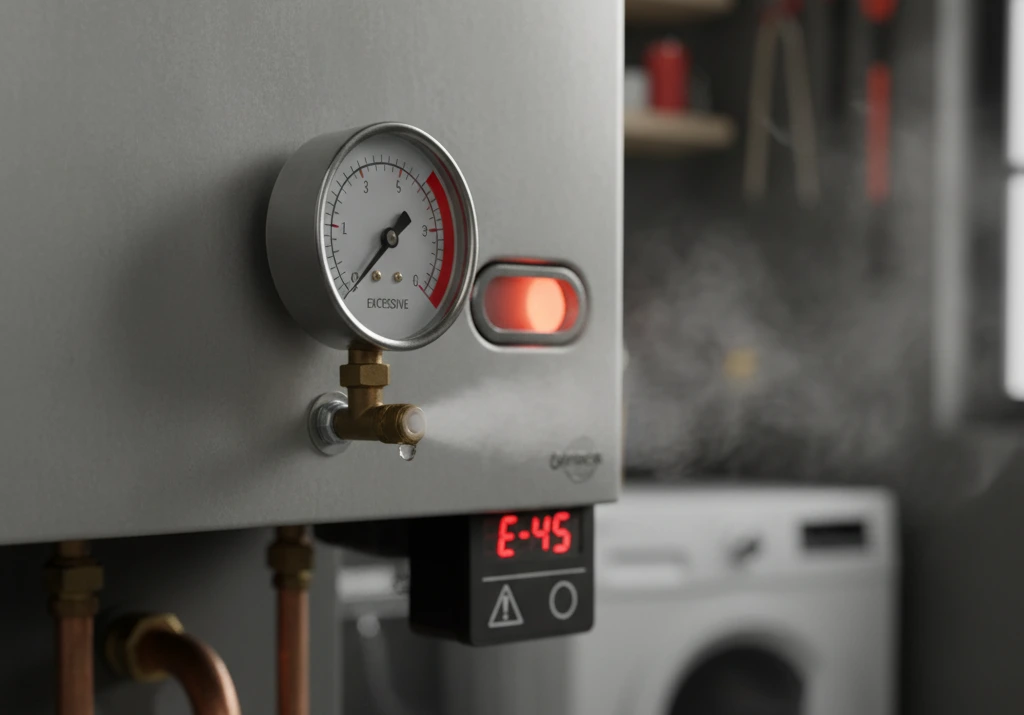
Cold at the top and warm at the bottom usually means trapped air. Here is how to bleed a radiator properly, re-pressurise the boiler afterwards, and recognise when the air keeps coming back because something more serious is going on.
One of the most common heating complaints we hear in London homes is simple to describe and easy to misread: the radiator is warm at the bottom but stubbornly cold across the top. You turn the heating up, you wait, you press your hand flat against the panel, and the top third stays cool while the rest of the room slowly gets there. Nine times out of ten this is trapped air, and it is one of the few heating jobs a homeowner can genuinely sort out without a tradesperson. The tenth time, though, it is a symptom of something that keeps refilling the system with air, and no amount of bleeding will hold. This guide walks through both.
We will cover why air collects in radiators in the first place, the right way to go about bleeding radiators safely, why you need to check and often re-pressurise the boiler afterwards, and the honest warning signs that the air is a symptom rather than the problem. If you would rather not touch it at all, that is a completely reasonable choice, and we will be straight about what a professional visit typically costs and when it is worth booking one.
Why radiators trap air (and why the top goes cold)
A wet central heating system is a sealed loop of water pushed round by a pump. When everything is working, that loop is full of water and nothing else. Air is the enemy of a full loop. Because air is lighter than water, any gas that finds its way into the system rises and collects at the highest points it can reach. Inside a radiator, the highest point is the top of the panel. So when a pocket of air builds up, it sits along the top, physically displacing the hot water that should be there. The bottom of the radiator, fed directly from the flow pipe, still gets hot. The top, blocked by the air pocket, stays cold. That temperature split, hot bottom and cold top, is the classic fingerprint of trapped air.
Where does the air come from? A few ordinary sources. When a system is drained and refilled, or topped up after a pressure drop, small amounts of air come in dissolved in the fresh water and later separate out. Every time you re-pressurise a combi boiler with the filling loop, you introduce a little more. Older open-vented systems with a header tank in the loft can draw air in if the pump is oversized or badly positioned, a phenomenon plumbers call pumping over. And then there are the causes that matter more, which we come back to later: a small leak somewhere in the pipework can let air be drawn in even while it lets water out, and internal corrosion can generate hydrogen gas inside the radiators themselves. For a one-off cold top after the summer, ordinary trapped air is almost always the answer. For air that returns week after week, it rarely is.
The consensus you will find across UK DIY forums such as r/DIYUK and DIYnot is reassuringly consistent on the basics: bleeding a radiator is a beginner-friendly job, the tools are cheap, and the main mistakes people make are forgetting to turn the heating off first and forgetting to check the boiler pressure afterwards. That matches our own experience on the ground. Where the same forums get more cautious, and rightly so, is around radiators that need bleeding again and again. The recurring advice there is to stop treating the symptom and start looking for the cause.
Before bleeding radiators: what you need and what to check
The kit is minimal. You need a radiator bleed key, which costs very little from any hardware shop or supermarket, though on many modern radiators a flat-head screwdriver fits the square or slotted valve instead. You need a cloth or small container to catch the water that comes out, because it will, and it is often dirty. A pair of gloves is sensible, and an old towel under the valve protects the floor and any decoration below.
Before touching anything, take note of two things. First, find your boiler and look at the pressure gauge. On a sealed combi system this is usually a dial or digital readout showing the system pressure, and cold it should typically sit somewhere around 1 to 1.5 bar. Note the current reading, because bleeding removes water as well as air and the pressure will drop as you go. Second, work out which radiators are affected. If it is one radiator, you have a local air pocket. If several upstairs radiators are cold at the top while downstairs ones are fine, that is still usually air, and you will want to bleed from the lowest affected radiator upward.
How to bleed a radiator, step by step
- Turn the heating off and let the system cool. This is the step most people skip and the one that matters most. With the pump running, water is circulating and air is being pushed around the system, so you may not catch the pocket cleanly, and hot water can spit out of the valve and scald you. Switch the heating off at the thermostat or programmer and give the radiators fifteen to thirty minutes to cool so they are warm at most, not hot.
- Locate the bleed valve. It sits at the top of the radiator, on one end, usually a small square or slotted screw recessed into a round nut. This is where the bleed key goes.
- Position your cloth and container. Hold the cloth under and around the valve, with a container ready. The water inside is often black or brown from the system, so protect carpets, skirting and paintwork.
- Turn the key slowly, anticlockwise. A quarter to half a turn is plenty. You are not removing the valve, just cracking it open. You should hear a hiss as the trapped air escapes. Keep the key still and let the air out steadily.
- Wait for water, then close it. When the hissing stops and a steady dribble of water appears with no more spluttering, the air is out. Close the valve by turning the key clockwise until it is snug. Do not overtighten, as you can strip or damage the valve. Wipe the area dry.
- Move to the next radiator if needed. Work through the affected radiators, generally lowest floor to highest, or nearest the boiler to furthest. In a two-storey London terrace or flat, that often means finishing on the top-floor radiators where air naturally collects.
That is the whole job. On a normal system it takes a few minutes per radiator. If air comes out easily and water follows, you have done exactly what was needed and the cold patch should clear once you fire the heating back up.
The step people forget: re-checking and re-pressurising the boiler
Here is the part that turns a half-finished job into a proper one. Every time you bleed a radiator, you let a little water out along with the air. On a sealed combi system, that lost water shows up as a drop in pressure on the boiler gauge. Bleed several radiators and the drop can be enough to push the system below its minimum, at which point the boiler may refuse to fire or may lock out entirely. Plenty of people bleed their radiators, feel pleased, then panic an hour later when the heating will not come on, not realising the two are connected.
So once you have finished bleeding, go back to the boiler and read the pressure gauge again. If it has dropped below the normal cold range, typically under about 1 bar, you need to top it back up using the filling loop, the braided or rigid link between the two water pipes under the boiler. Open the valves slowly to let mains water in, watch the gauge climb back to roughly 1 to 1.5 bar, then close the valves firmly. Do it gently and in short bursts so you do not overshoot. We have written a fuller walkthrough of this in our guide on how to re-pressurise a boiler, including what to do if the pressure will not hold or climbs too high.
Once the pressure is back in range, turn the heating on and check your radiators again. The previously cold tops should now heat evenly. It is worth going round the whole house with your hand to confirm nothing has been left half-hot. If a radiator you did not bleed has now gone cold at the top, the air simply migrated, and a quick second bleed sorts it.
Symptom to cause: reading what your radiators are telling you
Not every cold radiator is an air problem. The pattern of where the cold is tells you a great deal about the cause. Use the table below as a rough diagnostic guide before you reach for the bleed key.
| What you notice | Most likely cause | What it usually means |
|---|---|---|
| Cold at the top, warm at the bottom | Trapped air | Bleed the radiator; a standard, fixable job |
| Cold at the bottom, warm at the top | Sludge or corrosion build-up | Sediment settling at the base; may need a power flush, not bleeding |
| Whole radiator cold, others fine | Stuck valve or airlock | Check the valves are open; could be a seized thermostatic or lockshield valve |
| Radiators furthest from the boiler always coolest | Poor balancing | The system needs balancing so flow is shared evenly |
| Same radiator needs bleeding again and again | Air being drawn in, or gas being generated | Possible leak somewhere in the system, or internal corrosion producing hydrogen |
| Pressure keeps dropping between bleeds | Water escaping somewhere | A leak is the leading suspect; worth investigating properly |
The reason this matters is that bleeding only ever fixes the first row. If your radiator is cold at the bottom, bleeding does nothing, because the problem is heavy sludge sitting where the water should flow, and that is a flushing job. If the whole radiator is stone cold while its neighbours are toasty, look first at the valves at each end before assuming air. Matching the symptom to the cause saves you from repeating a fix that was never going to work.
Why the air keeps coming back
If you find yourself bleeding the same radiator every few weeks, stop and take it seriously. A healthy sealed system, once bled, should stay quiet for a long time, often a whole heating season or more. Air that returns quickly is not normal, and there are two causes worth understanding.
The first is a leak. It sounds counter-intuitive that a system losing water could also be gaining air, but it happens. A slow leak on the pipework, a valve, or a radiator lets water escape and, particularly on the suction side of the pump or at points where the pressure dips, lets air be drawn back in. The tell-tale sign is that your boiler pressure keeps falling and you keep needing to top it up, while the radiators keep needing bleeding. That combination, dropping pressure plus recurring air, is one of the clearest indications of a leak somewhere in the central heating. The leak may be visible, a damp patch under a radiator valve or a stain on a ceiling below pipework, or it may be hidden under floors or buried in a wall or screed where you will never spot it by eye.
The second cause is internal corrosion. Where oxygen has got into the system and there is no inhibitor protecting the metal, the water reacts with steel radiators and iron components and produces hydrogen gas. That gas collects at the top of radiators exactly as air would, so you bleed it out, and the corrosion quietly makes more. A quick, imperfect field test many plumbers and forum users mention: the gas from ordinary trapped air is just air, whereas gas from corrosion is hydrogen, which is flammable. If the gas coming out of your bleed valve smells foul like rotten eggs, or the bleed water is jet black, that points to significant corrosion and sludge, and the real fix is a chemical flush or power flush plus a proper dose of inhibitor, not endless bleeding.
This is the honest position the better DIY forums land on, and we agree with it: bleeding a radiator once is a fix, but bleeding the same radiator repeatedly is a diagnosis waiting to happen. The recurring air is telling you something. On our own callouts, persistent air alongside falling pressure is one of the most common reasons we end up carrying out central heating leak detection in London, tracing where the water is going without ripping up floors on a hunch.
A word on balancing
Balancing is a separate idea that often gets tangled up with bleeding, so it is worth separating out. Bleeding removes air. Balancing shares the hot water fairly between radiators. In an unbalanced system, radiators close to the boiler get hot quickly and hog the flow, while radiators at the far end of the house, often the ones upstairs or furthest along the pipe run, stay lukewarm no matter how long the heating runs. No amount of bleeding fixes that, because there is no air to remove; the water is simply taking the path of least resistance.
Balancing is done by adjusting the lockshield valve, the plastic-capped valve at the opposite end of the radiator from the thermostatic one. Restricting the flow slightly on the radiators nearest the boiler forces more hot water out to the far ones, evening out the temperatures across the house. It is a fiddly job done with the heating on, a couple of clip-on thermometers or a decent infrared thermometer, and a fair amount of patience, adjusting each radiator a little at a time and letting the system settle between changes. It is doable as a careful DIY task, but it is the sort of thing many homeowners are happy to hand over. If your radiators are individually fine when isolated but the house never heats evenly, balancing rather than bleeding is what you are after.
When a cold radiator needs a professional
Plenty of cold radiators are a five-minute fix with a bleed key, and we would never pretend otherwise. But there are clear points at which it stops being a DIY job and starts being one worth handing over. Call in a professional when: the same radiator needs bleeding repeatedly; the boiler pressure keeps dropping and you are topping it up more than very occasionally; the bleed water is jet black or smells of rotten eggs; a radiator is cold at the bottom rather than the top; a valve is seized or weeping; or you simply are not comfortable working around the boiler and its pressure. There is no shame in the last one, and getting it wrong with the filling loop can flood a system.
As a rough guide to cost, and these are typical UK trade cost-guide ranges rather than a quote, a straightforward heating engineer callout to bleed and balance a system commonly falls in the region of eighty to a hundred and fifty pounds depending on the size of the property and how many radiators are involved. A chemical or power flush to deal with serious corrosion and sludge is a bigger job, often several hundred pounds, again scaling with the number of radiators. Tracing a hidden leak is priced differently because the value is in finding the fault precisely rather than guessing, and the actual figure depends on access and how buried the pipework is. We would always rather quote honestly for the specific job than throw out a headline number that means nothing until someone has seen the system.
On our own service, we work to honest arrival windows rather than the vague all-day waits that leave you stuck in. If the problem turns out to be recurring air pointing at a leak, we use non-invasive detection first, thermal imaging, acoustic tracing and pressure testing, so we are not opening up floors and walls on guesswork. And for that leak-detection work we operate on a no find, no fee basis: if we cannot locate the leak, you are not charged for the detection. A cold radiator is sometimes just a cold radiator, but when it is the visible edge of a leak, finding it accurately is what actually protects your home. If you need someone out sooner rather than later, our emergency plumber in London can help, and we will be straight with you about whether it is a job you could finish yourself in five minutes with a bleed key.
Start with the basics. Turn the heating off, bleed the cold radiators with the key, catch the water, close the valve when water appears, and re-check the boiler pressure. If that solves it, brilliant, you have saved yourself a callout. If the air comes straight back, listen to what it is telling you and get the underlying cause looked at before it turns into a bigger and wetter problem.
Frequently asked questions
How do I know if my radiator needs bleeding?
The classic sign is a radiator that is warm at the bottom but cold across the top when the heating has been on for a while. That temperature split means a pocket of air is trapped at the top of the panel, displacing the hot water. If instead the radiator is cold at the bottom and warm at the top, or stone cold all over, bleeding is unlikely to help and the cause is more likely sludge or a valve problem.
Should the heating be on or off when I bleed a radiator?
Off. Turn the heating off at the thermostat or programmer and let the radiators cool for fifteen to thirty minutes first. With the pump running, water and air are being pushed around the system so you may not clear the air pocket cleanly, and hot water can spit out of the valve and scald you. Bleed when the radiators are cool or only warm to the touch.
Why does my boiler pressure drop after bleeding radiators?
Because bleeding lets a small amount of water out along with the air. On a sealed combi system, that lost water shows as a drop on the boiler pressure gauge. Bleed several radiators and the pressure can fall below the minimum needed for the boiler to fire. After bleeding, check the gauge and, if it has dropped below about 1 bar cold, top it back up with the filling loop to roughly 1 to 1.5 bar.
Why does my radiator keep needing to be bled?
A healthy system, once bled, should stay quiet for a long time. Air that returns quickly usually means one of two things: a leak somewhere in the system letting water out and drawing air in, often shown by boiler pressure that also keeps dropping, or internal corrosion producing hydrogen gas inside the radiators. Neither is fixed by bleeding. If the bleed water is jet black or smells of rotten eggs, corrosion is likely; if the pressure keeps falling, a leak is the leading suspect and worth investigating properly.
Is bleeding radiators something I can do myself?
For a standard cold-at-the-top radiator, yes. It needs only a bleed key or flat screwdriver and a cloth, and takes a few minutes per radiator. The main things to get right are turning the heating off first, closing the valve as soon as water appears, and re-checking the boiler pressure afterwards. Call a professional if the same radiator keeps needing bleeding, the pressure keeps dropping, a valve is seized or weeping, or you are not comfortable working around the boiler.
How much does it cost to get a heating engineer to sort a cold radiator?
As a typical UK trade cost-guide range rather than a fixed quote, a straightforward callout to bleed and balance a system commonly falls around eighty to a hundred and fifty pounds depending on property size and radiator count. A power flush for serious sludge and corrosion is a larger job running into several hundred pounds. Tracing a hidden leak is priced on the work involved, and our leak detection is offered on a no find, no fee basis, so if we cannot locate the leak you are not charged for the detection.