How to Repressurise a Boiler (Step by Step, All Filling Loop Types)
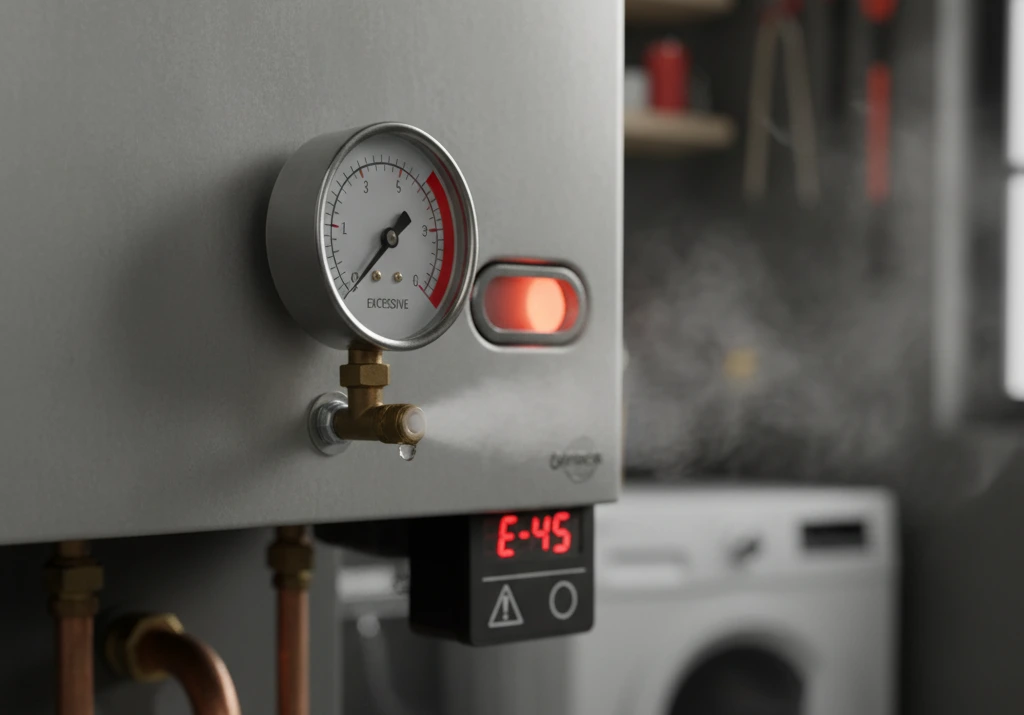
Repressurising a boiler takes five minutes once you know your filling loop type. This guide covers braided hoses, Worcester keys and keyless levers — and explains why pressure that keeps dropping is a hidden leak warning, not a boiler quirk.
A boiler showing low pressure is one of the most common heating problems in London homes, and in most cases it takes five minutes to fix yourself. Sealed central heating systems — which include almost every combi and system boiler installed in the last twenty-five years — rely on water being held at a set pressure. Lose a little water and the pressure drops; drop far enough and the boiler locks out, leaving you with no heating or hot water.
This guide walks you through repressurising every common type of filling loop: the external braided hose, the built-in keyed loop used on many Worcester Bosch models, and the keyless internal levers found on Vaillant, Ideal and Baxi boilers. Just as importantly, it explains what it means when the pressure will not stay put — because a boiler that needs topping up every week is not a boiler problem. It is almost always a leak problem, and repeatedly refilling the system quietly makes it worse.
Reading the pressure gauge: what the numbers actually mean
Before touching any valves, find the pressure gauge. On older boilers it is a round analogue dial on the front or underside, usually marked 0–4 bar with a green zone. Newer boilers often show pressure digitally on the display, sometimes only when you press a button or scroll through a menu — check your manual if you cannot see a reading.
The numbers to remember:
- 1 to 1.5 bar when the system is cold — this is the correct operating range for the vast majority of domestic boilers. Many installers aim for around 1.2 bar.
- Up to roughly 2 to 2.5 bar when the heating is running hot — water expands as it heats, so a rise of 0.3–0.5 bar during operation is completely normal.
- Below about 0.5 bar — most boilers will display a low-pressure fault code and shut down. Common codes include F22 or F23 (Vaillant), E119 (Baxi), F1 (Ideal) and 1017 or the low-pressure water symbol on Worcester Bosch models.
- Above 3 bar — the pressure relief valve will open and dump water through a copper discharge pipe outside. Never repressurise towards 3 bar.
Always take your reading when the system is cold — ideally first thing in the morning or at least an hour after the heating switched off. A reading taken mid-cycle will be artificially high and can trick you into thinking the pressure is fine when it is not.
Before you start: two minutes of preparation
- Switch the boiler off and let the system cool. Repressurising a hot system gives a misleading gauge reading and you risk scalding water if anything drips.
- Identify your filling loop type. Look underneath the boiler. A silver braided hose linking two pipes means an external loop. A plastic key slot or a pair of blue levers means a built-in arrangement — the sections below cover each.
- Know your target. You are aiming for 1–1.5 bar and no more. Pressure rises quickly once the valves are open, so plan to watch the gauge the whole time.
None of this requires a Gas Safe engineer — topping up pressure is a homeowner task, the same as bleeding a radiator. You are only handling water valves, never the gas side.
Method 1: external braided filling loop (most common)
The external filling loop is a flexible silver braided hose, roughly 30cm long, connecting a mains cold water pipe to the heating circuit beneath or near the boiler. There is a valve at each end: some have small plastic or metal lever handles, others have a screw slot that needs a flathead screwdriver.
- Make sure both ends of the hose are screwed on hand-tight. If the loop has been removed (as it technically should be after each use), reattach it and nip up the nuts by hand.
- Open the first valve fully — turn the lever so it sits in line with the pipe, or turn the screw slot a quarter-turn until the slot lines up with the pipe direction.
- Slowly open the second valve. You should hear water rushing into the system.
- Watch the gauge climb. When it reaches about 1.2–1.5 bar, close the second valve first, then the first.
- Check both valve ends for drips, then disconnect the braided hose and keep it somewhere you will find it again. Water regulations require the loop to be disconnected after use, and a permanently connected loop with a weeping valve is a classic cause of mystery pressure behaviour.
- Switch the boiler back on. If a fault code was showing, it should clear automatically; some models need a reset button pressed.
Method 2: built-in keyed filling loop (common on Worcester Bosch)
Many Worcester Bosch combis — particularly Greenstar CDi and Si ranges — use an internal filling key instead of a hose. The key is a small white or blue plastic fitting, usually clipped into a tray or holder underneath the boiler itself.
- Locate the key and the keyhole slot on the underside of the boiler. You will see an open padlock and a closed padlock symbol moulded next to the slot.
- Push the key firmly into the slot with its arrow pointing at the open padlock, then turn it to the closed padlock position. This seats the key and opens the internal link.
- Turn the adjacent white or grey plastic nut anti-clockwise. You will hear water flowing in.
- Watch the gauge and close the nut when you reach 1.2–1.5 bar.
- Turn the key back to the open padlock position and pull it out. A small splash of trapped water is normal; keep a cloth handy.
- Clip the key back into its holder so it is there next time.
If the key is missing — a frequent problem in rented flats — replacements cost a few pounds from plumbing merchants, but check your exact model, as there are different key designs.
Method 3: keyless internal filling levers (Vaillant, Ideal, Baxi and others)
The simplest arrangement of all. Many modern boilers — including numerous Vaillant ecoTEC, Ideal Logic and Baxi models — have one or two small levers or taps built into the pipework directly under the casing, often coloured blue or grey.
- Find the filling lever(s) under the boiler. Two-lever versions need both opened; single-lever versions just the one.
- Pull each lever down (or turn it a quarter-turn) until you hear water flowing.
- Watch the display or gauge climb to 1.2–1.5 bar.
- Return the levers to their closed position — snap them firmly shut, as a lever left fractionally open will slowly overfill the system for days.
| Filling loop type | Typically found on | Tools needed | Time |
|---|---|---|---|
| External braided hose | Most brands, older installs, system boilers | Sometimes a flathead screwdriver | 5 min |
| Internal keyed loop | Worcester Bosch Greenstar CDi/Si ranges | The plastic filling key | 5 min |
| Keyless internal levers | Vaillant ecoTEC, Ideal Logic, Baxi, newer combis | None | 2–3 min |
Common mistakes when repressurising
Overfilling past 2 bar
The gauge moves faster than people expect. If you overshoot, do not panic: bleed a radiator with a radiator key until the pressure comes back down to 1.5 bar, catching the water in a cloth or cup. Persistent overfilling stresses the expansion vessel and forces the pressure relief valve to discharge outside — and once a PRV has passed water, it often never reseals properly and needs replacing (typically around £100–£150 fitted, based on trade cost guides).
Leaving the external loop connected
UK water regulations say the braided loop should be disconnected after filling, and there is a practical reason too: if either valve weeps, mains water trickles into the heating circuit continuously. The result is a system whose pressure mysteriously rises over days — or one where a genuine leak is masked because the loop keeps quietly topping it up.
Reading the gauge while hot
A system at 1.4 bar hot may be at 0.9 bar cold. Always judge pressure cold, and always compare like with like when monitoring for a drop.
Closing the valves in a rush
Close the valve furthest from the mains first, then the supply side, and check for drips before walking away. A valve left a hair open is the single most common reason DIY repressurising "doesn't work".
Pressure drops again within days or weeks: the hidden leak warning
Here is the part most guides skip. Repressurising treats a symptom. If the pressure falls again, water is leaving your sealed system somewhere, and how fast it falls tells you a lot:
| How quickly pressure drops | Most likely cause | Sensible next step |
|---|---|---|
| Once or twice a year | Normal micro-losses, radiator bleeding | Top up and monitor — no action needed |
| Every few weeks | Slow leak at a radiator valve, joint or the boiler's internal components | Check every radiator valve and visible joint; watch the PRV discharge pipe outside |
| Every few days | Failed expansion vessel, faulty PRV, or a concealed pipe leak | Gas Safe engineer to test the boiler; leak detection if the boiler checks out |
| Within hours | Significant leak, often under floors or within walls | Professional central heating leak detection before the damage spreads |
Visible leaks are easy: look for drips at radiator valves, damp skirting, staining under the boiler and water from the discharge pipe outside. The difficult cases are the invisible ones — heating pipes buried in screed floors, running under floorboards or boxed into walls. A pinhole in a buried pipe can lose litres a day with nothing to see except a slowly falling gauge, until one day a damp patch appears on a ceiling or a floor starts lifting. We cover the full list of culprits in our guide to why boilers lose pressure.
Why repeated top-ups quietly damage your system
It is tempting to just keep topping up — it takes two minutes, after all. But every refill draws fresh, oxygen-rich mains water into a circuit designed to run on the same deoxygenated water for years. The consequences build slowly:
- Corrosion accelerates. Fresh oxygen attacks steel radiators from the inside, producing black iron oxide sludge (magnetite) that settles in radiators and pipework.
- Inhibitor gets diluted. The chemical inhibitor protecting your system is progressively washed out with every refill and every leak, removing the corrosion protection entirely over time.
- Limescale builds in hard-water London. Most of London sits on hard water. Every litre of fresh mains water deposits scale inside the boiler's heat exchanger — a leading cause of premature boiler failure.
- Sludge kills components. Magnetite sludge wrecks pumps, blocks heat exchangers and causes cold spots in radiators, often ending in a power-flush bill of £400–£700 or a new boiler.
A system that needs weekly top-ups for six months can suffer more internal corrosion than a sealed, stable system does in a decade. Finding and fixing the leak is always cheaper than the slow damage of ignoring it.
Gas Safe engineer or leak detection specialist: who to call
Two different problems need two different trades, and calling the wrong one wastes money.
Call a Gas Safe registered engineer when the fault is likely inside the boiler. Anyone opening the boiler casing must be Gas Safe registered by law. Boiler-side causes of pressure loss include a failed expansion vessel (typically £150–£450 to replace or recharge, more for internal vessels on compact combis), a passing pressure relief valve, or a leaking internal heat exchanger. A good tell: if water drips from the boiler itself or from the copper discharge pipe on the outside wall, start with the engineer.
Call a leak detection specialist when the boiler checks out but pressure still falls. If an engineer has tested the expansion vessel and PRV and found them sound, the water is escaping from the pipework — and finding a buried leak is a different discipline entirely. At London Leak Specialist we locate concealed heating leaks non-destructively using thermal imaging, tracer gas and acoustic equipment, which means pinpointing the leak before anyone lifts a floorboard rather than digging exploratory holes. Our detection rate is fixed and agreed at booking — typically £340–£680 depending on the property — with a genuine no find, no fee promise, and full details on our pricing page.
If the leak has caused damage — stained ceilings, warped flooring — your buildings insurance may cover the cost of locating it under the trace and access clause found in most policies. We provide insurer-ready trace and access reports within 48 hours of detection to support your claim.
What homeowners report on Reddit and forums
Threads on UK DIY and housing forums about boiler pressure follow remarkably consistent patterns. The most common story is relief: people put off repressurising for weeks fearing it was an engineer job, then discover it takes three minutes with a filling key. The missing Worcester filling key is a running theme in rented properties, with tenants describing hunts through kitchen drawers before finding a replacement online for a few pounds.
The cautionary tales are just as consistent. Several recurring stories describe overshooting to 2.5–3 bar on a first attempt, then finding the pressure relief valve dripping outside for weeks afterwards. Others describe topping up every few days for months — treating it as a quirk of an old boiler — until a ceiling stain or a lifted floorboard revealed a heating pipe that had been leaking into the structure the whole time, turning a straightforward pipe repair into a major drying-out and reinstatement job. The consensus advice from experienced posters is blunt: one top-up a year is fine; more than one a month means find the leak, because the refills are corroding the system while you wait.
Quick recap and when to get help
- Check the gauge cold: 1–1.5 bar is healthy.
- Top up using your filling loop — hose, key or levers — and stop at about 1.2–1.5 bar.
- Close everything firmly, disconnect external loops, and note the date.
- If pressure holds for months, you are done. If it drops within days or weeks, something is leaking — and the faster it drops, the sooner it needs finding.
If your boiler will not hold pressure and there is no visible leak, we can help. London Leak Specialist covers all 32 London boroughs with specialist leak detection for concealed heating and water pipes: a fixed hourly detection rate agreed before we attend, no find no fee, insurer-ready reports within 48 hours, and any repair quoted before work begins. Get in touch and tell us how quickly the pressure drops — it is the single most useful thing you can tell us.
Frequently asked questions
What pressure should my boiler be at?
Between 1 and 1.5 bar when the system is cold — most installers aim for around 1.2 bar. When the heating runs, water expands and the reading can rise to 2 or even 2.5 bar, which is normal. Below about 0.5 bar most boilers lock out with a low-pressure fault code, and above 3 bar the pressure relief valve opens and discharges water outside. Always judge pressure with the system cold.
Do I need a Gas Safe engineer to repressurise my boiler?
No. Topping up boiler pressure is a homeowner task, like bleeding a radiator — you are only operating water valves, never touching the gas side. A Gas Safe engineer is legally required only when the boiler casing needs to come off, for example to test or replace the expansion vessel, pressure relief valve or heat exchanger. If pressure keeps dropping after your top-ups, that is when professional help becomes worthwhile.
Why does my boiler keep losing pressure after I top it up?
Water is escaping the sealed system somewhere. The usual suspects are a failed expansion vessel, a pressure relief valve that no longer seals, a weeping radiator valve, or a concealed leak in heating pipes under floors or inside walls. The speed of the drop is the clue: losing pressure over months is normal wear, but needing a top-up every few days points to a genuine leak that needs finding.
What happens if I overfill my boiler past 2 bar?
Bleed a radiator with a radiator key until the gauge falls back to around 1.5 bar, catching the water in a cloth. Sustained overfilling stresses the expansion vessel and can force the pressure relief valve to discharge outside — and once a PRV has passed water it often never reseals, typically costing £100–£150 to replace. Overfilling is the most common DIY repressurising mistake, so open the valves slowly and watch the gauge.
Where is the filling loop on a Worcester or Vaillant boiler?
Look underneath the boiler. Many Worcester Bosch Greenstar models use a small white or blue plastic filling key that slots into a keyhole marked with padlock symbols, with the key clipped into a holder under the casing. Most modern Vaillant ecoTEC, Ideal Logic and Baxi boilers use one or two small built-in levers or taps in the pipework below the boiler instead. Older installations of any brand usually have a detachable silver braided hose.
Is it bad to keep topping up boiler pressure?
Occasionally, no — once or twice a year is normal. But frequent top-ups draw fresh, oxygen-rich mains water into the system, which accelerates internal corrosion, dilutes the protective inhibitor and, in hard-water areas like London, deposits limescale in the heat exchanger. The resulting sludge can wreck pumps and radiators, often ending in a £400–£700 power flush. If you top up more than monthly, find and fix the leak.