Damp or Leak? How to Tell the Difference Before Spending Money
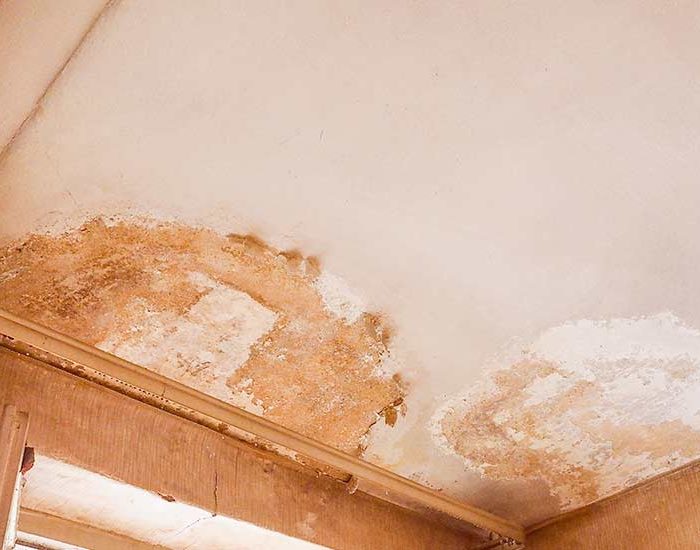
The same damp patch can be condensation, rising damp, penetrating damp or a hidden plumbing leak — and each has a completely different fix at a completely different price. Here is how to diagnose it correctly before spending thousands on the wrong treatment.
A damp patch on a wall is one of the most expensive symptoms in a British home — not because it costs much to fix, but because it costs so much to misdiagnose. The same brown stain can be condensation, rising damp, penetrating damp or a hidden plumbing leak, and the four problems have four completely different fixes at four completely different prices. Treat a plumbing leak as rising damp and you can spend £1,500–£3,000 on chemical injection and re-plastering while a pipe quietly keeps soaking the wall behind your brand-new render.
This guide sets out how each moisture problem behaves, the pattern-recognition clues that separate them, the two free tests that rule a plumbing leak in or out, and why the diagnosis you get so often depends on which trade you called first.
The four suspects, and how each one behaves
Condensation
Condensation is by far the most common cause of damp in UK homes, and the cheapest to fix. Warm, moist indoor air — from cooking, showers, drying laundry — hits a cold surface and turns back into water. It shows up as beads of moisture on windows, and as black speckled mould in room corners, behind wardrobes and around window reveals. It gets dramatically worse in winter and improves when you ventilate and heat consistently. There is no tidemark, no salt staining, and the wall is usually dry just below the surface.
Rising damp
Rising damp is ground moisture drawn up through masonry by capillary action where a damp-proof course (DPC) is missing, bridged or has failed. Genuine rising damp affects ground-floor walls only, forms a fairly level tidemark that rarely climbs above about a metre from floor level, and typically carries ground salts up with it — visible as a white crystalline bloom or a persistent stain band where hygroscopic salts keep pulling moisture from the air. It is real, but it is diagnosed far more often than it occurs: the 2022 joint position statement from RICS, Historic England and the Property Care Association acknowledges that much of what gets labelled rising damp is actually condensation, penetrating damp or a leak.
Penetrating damp
Penetrating damp is rainwater getting through the building fabric: a cracked gutter, blown pointing, a failed roof flashing, porous brickwork or ground levels built up above the DPC. Its giveaway is weather correlation — patches darken during or shortly after heavy rain and slowly dry in fine spells. It can appear at any height, usually on or near an external wall, and often lines up with a visible defect outside: a leaking downpipe, a saturated brick panel, a cracked sill.
Plumbing leak
A plumbing or heating leak is the odd one out because it ignores the weather and the seasons entirely. A leak from a supply pipe, waste pipe, radiator circuit or appliance produces a patch that is persistent or steadily growing, often with sharply defined edges, and frequently in a location that makes no sense for weather — the middle of an internal wall, a first-floor ceiling below a bathroom, a warm patch on a floor above a hot-water pipe. Supporting evidence includes a water meter that moves when nothing is running, a combi boiler needing regular top-ups, an unexplained rise in a metered bill, or hissing in a quiet house.
Pattern recognition: the side-by-side comparison
Before anyone puts a moisture meter on your wall, the location and behaviour of the patch tells you most of what you need to know.
| Clue | Condensation | Rising damp | Penetrating damp | Plumbing leak |
|---|---|---|---|---|
| Typical location | Corners, window reveals, cold spots, behind furniture | Ground-floor walls only, from skirting up | External walls, chimney breasts, below roof junctions | Anywhere near pipework — internal walls, ceilings, floors |
| Height pattern | Often high up or in corners | Level band, rarely above ~1 m | Any height, matches an external defect | Any height, radiates from a point source |
| Weather link | Worse in cold weather | Fairly constant, may worsen in wet winters | Follows rainfall within hours or days | None — persists through dry spells |
| Salt tidemarks | No | Yes — white crystalline band is the classic sign | Sometimes, at patch edges | Rarely (mains water is low in salts) |
| Mould | Black speckled mould, spreads across surfaces | Uncommon (salts inhibit mould) | Patchy, at the damp area | Possible at edges; patch often too wet for mould |
| Water meter / boiler pressure | Normal | Normal | Normal | Meter creeps or boiler loses pressure |
Two rules of thumb follow. First, damp on the first floor or above rules out rising damp entirely — you are looking at condensation, penetrating damp or plumbing. Second, a patch that ignores the weather and does not improve in a dry, well-ventilated week puts plumbing at the top of the list.
Reading the wall: salts, mould and stain edges
The wall surface itself carries evidence worth reading before you pay for a survey.
- White crystalline deposits (efflorescence) in a level band near the base of a ground-floor wall point to ground moisture and genuine rising damp — salts travel up with the water and are left behind as the wall evaporates.
- Black speckled mould with no tidemark is the signature of condensation. Mould needs a surface that is damp but not saturated, so you rarely see it in the middle of a soaked leak patch.
- A defined stain with crisp brown edges, especially on a ceiling, suggests a discrete water event — a leak or an overflow — rather than ambient moisture. Our guide to damp patches on ceilings covers that scenario in detail.
- A patch that is wettest at one point and fades outward in a rough circle or teardrop suggests a point source: a pipe joint, a shower tray corner, a radiator valve.
- Bubbling paint and perished plaster low on a wall with no salt band can be a slow leak wicking sideways along the floor slab — a pattern regularly misread as rising damp.
The two tests that rule plumbing in or out
Before committing to any damp treatment, spend twenty minutes ruling the plumbing in or out. These two checks cost nothing and settle the biggest question in the diagnosis.
The water meter test
- Make sure no water is being used — taps off, appliances finished, nobody flushing.
- Find your meter (usually in a footpath boundary box or under the kitchen sink) and note the reading, including the small red dials or flow indicator.
- Wait 60–90 minutes without using any water, then read it again. Overnight is better still.
- If the reading has moved, water is escaping. To narrow it down, close the internal stop tap and watch again: still moving means a leak on the underground supply pipe; stopped means the leak is inside the house.
No meter movement over a long still period effectively rules out a mains-fed leak — though it does not rule out waste-pipe leaks (which only flow when you use water) or heating-circuit leaks, which brings us to the second test.
The heating pressure test
A sealed central heating system is its own leak detector. Top the boiler up to around 1.5 bar and watch the gauge over 24–48 hours, hot and cold. A steady drop with no visible water at radiators or valves points to a hidden heating leak — often under a floor, where warm escaping water evaporates before it ever shows as a damp patch. Pressure loss is not always a leak, though: failing pressure-relief valves and expansion vessels are common culprits, which is why a proper central heating leak detection visit tests the boiler components before tracing pipework.
What moisture meters can and cannot tell you
Almost every damp survey involves a handheld electrical moisture meter, and almost every homeowner over-trusts the number on its screen. Two things are worth knowing.
First, pin-type conductance meters are calibrated for timber. On plaster and masonry they measure electrical conductivity, not true moisture content, and give only a screening indication. Salts, foil-backed wallpaper and older black-ash mortars all conduct electricity and can produce alarming readings on a wall that is essentially dry. A surveyor who condemns a wall on pin readings alone is giving you a sales pitch, not a diagnosis.
Second, the useful information is the pattern, not the number. Systematic damp and moisture mapping — readings taken on a grid, low down, high up, near the patch and far from it — reveals whether moisture rises from the floor, tracks in from outside, sits only on the surface, or radiates from a hidden point. Professional leak detection adds tools a damp survey does not carry: thermal imaging, acoustic listening equipment, tracer gas and pipe tracing. Used together, they locate a leak to within centimetres rather than condemning a whole wall.
Commission bias: why every trade finds its own problem
The uncomfortable structural truth about damp diagnosis in the UK: most "free damp surveys" are carried out by companies that sell damp-proofing, and most leak surveys by companies that sell leak repairs. Neither is necessarily dishonest, but both look at your wall through the lens of what they can invoice for. A surveyor earning commission on chemical DPC injections has every incentive to read a low-level patch as rising damp; a roofer sees failed flashing; a window company sees failed seals.
The scale of the problem is well documented. Independent surveyors, including former senior RICS figures, have publicly argued that genuine rising damp is far rarer than the volume of injected DPCs implies, and the RICS / Historic England / PCA joint position on damp warns against diagnosis-by-moisture-meter and treatment sold by the firm doing the diagnosing.
The practical defence is simple: separate the diagnosis from the treatment wherever the two point at the same company, and get the cheap, objective tests done first. That is also why we structure our own work the way we do — a leak detection visit at a fixed hourly rate agreed at booking, on a genuine no-find-no-fee basis, with any repair quoted separately before work starts. If the meter test, pressure test and our instruments say there is no plumbing leak, you pay nothing for the detection and you have eliminated the most expensive wrong answer before talking to a damp specialist.
What a genuinely independent diagnosis looks like
Whether it comes from an independent damp surveyor, a chartered surveyor or a leak detection engineer, a trustworthy diagnosis has recognisable features:
- It starts outside. Gutters, downpipes, pointing, render, ground levels and the DPC line are inspected before anyone drills your plaster.
- It rules plumbing in or out with evidence — a meter test, a heating pressure test, thermal imaging — rather than assumption.
- It explains the pattern. A good report says why the moisture is where it is, not just that a meter beeped.
- It is decoupled from the sale. The person diagnosing either does not sell the fix, or prices diagnosis and repair as separate, refusable stages.
- It produces something you can use. For plumbing leaks in insured properties, that means a trace and access report your insurer will accept — ours are delivered within 48 hours of the visit.
The cost of getting it wrong
Misdiagnosis is not a rounding error. These are typical UK ranges from current trade cost guides:
| Scenario | Typical cost | Fixes the problem if it's actually a leak? |
|---|---|---|
| Chemical DPC injection + re-plastering (per wall/small terrace) | £1,500–£3,000 | No — the wall re-saturates |
| Full damp-proofing package, medium property | £2,000–£5,000 | No |
| Cellar tanking / cavity drain membrane | £8,000–£14,000 | No — and a leak can overwhelm it |
| Professional leak detection (fixed hourly rate, agreed at booking) | £340–£680 | Identifies or eliminates the leak definitively |
| Targeted pipe repair once located | Often £150–£600 | Yes |
The asymmetry is the point. Ruling a leak in or out costs a few hundred pounds at most — and nothing if you start with the free meter and pressure tests. Guessing wrong the other way costs thousands, plus months of continued water damage behind the new plaster, and can prejudice an insurance claim if the escape of water is only discovered later. Our leak detection cost guide breaks down what drives the fee, and our pricing page sets out the fixed bands agreed before booking.
What homeowners report on Reddit and forums
Spend an evening in the property threads of UK forums — r/DIYUK, r/HousingUK, MoneySavingExpert, DIYnot — and the same stories repeat. Homeowners describe getting three "free" damp surveys and three different diagnoses, each matching the surveying company's own service line. A recurring story is the low wall patch treated as rising damp with injection and re-plastering, only for the damp to return within a year because the real cause was a leaking pipe, a bridged DPC from raised patio levels, or a dripping washing machine valve.
The community consensus is consistent: do the water meter test before paying anyone; watch the boiler pressure for a few days; walk around outside during heavy rain before believing any rising damp diagnosis; and pay for an independent survey rather than accepting a free one from a company that sells the treatment. Posters also warn that a fast-doubling water bill sometimes turns out to be a faulty meter or a stuck ballcock rather than a leak — methodical elimination beats jumping to the most dramatic conclusion. Several threads end with a paid leak detection visit finding a pinhole in a heating pipe that three damp quotes had missed, with the insurer covering the repair and reinstatement under trace and access cover.
A sensible order of operations
- Photograph the patch and note the date. Recheck after heavy rain and after a dry week — weather correlation alone separates penetrating damp from the rest.
- Run the water meter test overnight and log boiler pressure for 48 hours.
- Inspect outside: gutters, downpipes, pointing, ground levels, overflow pipes.
- Fix ventilation and drying habits for four weeks if the pattern says condensation.
- If the meter moves, the boiler drops, or the patch ignores the weather — book professional leak detection before any damp-proofing quote.
- Commission damp-proofing only once plumbing is ruled out with evidence, and from a firm that did not perform the diagnosis.
If your damp patch fits the leak profile — weather-indifferent, growing, near pipework, or paired with a creeping meter or falling boiler pressure — we can settle the question definitively. London Leak Specialist covers all 32 London boroughs with a fixed hourly detection rate agreed at booking (typically £340–£680 in total), genuine no-find-no-fee terms, insurer-ready trace and access reports within 48 hours, and any repair quoted before work begins. Get in touch and tell us what the wall is doing — we will tell you honestly whether it sounds like our problem or someone else's.
Frequently asked questions
How can I tell if damp is from a leak or rising damp?
Check three things: height, weather and your water meter. Rising damp only affects ground-floor walls, forms a level tidemark below about one metre and usually leaves white salt deposits. A plumbing leak can appear at any height, ignores the weather, often has sharply defined or spreading edges, and is frequently confirmed by a water meter that moves when no water is being used or a boiler that keeps losing pressure. If the patch is upstairs, rising damp is ruled out entirely.
Can a plumbing leak be mistaken for rising damp?
Yes, and it happens regularly. A slow leak from a pipe at floor level wicks sideways and upward through plaster, producing a low damp band that looks very similar to rising damp. The RICS, Historic England and Property Care Association joint position statement acknowledges that much of what gets diagnosed as rising damp is actually condensation, penetrating damp or a leak. Always run a water meter test and a heating pressure check before accepting a rising damp diagnosis.
How do I test for a hidden water leak at home?
Two free tests cover most cases. First, the meter test: with all water off, note your meter reading and check it again after 60–90 minutes or overnight — any movement means water is escaping. Second, the heating pressure test: top a sealed system up to around 1.5 bar and watch the gauge for 24–48 hours; a steady drop with no visible drips suggests a hidden heating leak. If either test is positive, book professional leak detection before any damp-proofing work.
How much does it cost if damp is misdiagnosed?
Trade cost guides put chemical DPC injection with re-plastering at roughly £1,500–£3,000 for a typical wall or small terrace, full damp-proofing packages at £2,000–£5,000, and cellar tanking at £8,000–£14,000. None of these fixes a plumbing leak, so the wall simply re-saturates and the money is wasted. By contrast, professional leak detection typically costs £340–£680 at a fixed hourly rate and definitively rules a leak in or out first.
Are moisture meter readings on walls reliable?
Only as a screening tool. Pin-type conductance meters are calibrated for timber; on plaster and masonry they measure electrical conductivity, not true moisture content. Salts from old damp episodes, foil-backed wallpaper and black-ash mortars can all produce high readings on a wall that is essentially dry. The pattern of readings across a wall is informative, but a diagnosis based solely on a beeping meter — especially from a company selling the treatment — should be treated with caution.
Should I get an independent damp survey before paying for treatment?
Yes, whenever the person diagnosing the problem also sells the fix. Free damp surveys from damp-proofing companies carry an obvious commission bias, and forum threads are full of homeowners who received three different diagnoses from three different trades. An independent diagnosis starts outside with gutters and ground levels, rules plumbing in or out with meter and pressure tests, explains why the moisture pattern fits the conclusion, and prices diagnosis separately from any repair work.